
There are some smells, aren’t there, that just burrow deep into your memory, laying down roots in the quiet corners of your heart? For me, one of those unmistakable, soul-soothing aromas is the deep, earthy scent of sweet paprika blooming in warm oil, mingling with caramelized onions and tender beef. It’s the prelude to a symphony, really, an overture to the comforting embrace of a truly exceptional beef paprikash.
I remember the first time I made this dish for Ethan. We were newly married, living in a tiny apartment in Portland, and I was trying to recreate a dish my grandmother used to make, a kind of Hungarian beef stew, though I didn’t know it by that name then. I wanted to impress him, to show him that my kitchen, humble as it was, could be a place of warmth, of tradition, of deep, satisfying flavor. The scent filled our small space, pulling him in from the living room, and the smile on his face as he took that first bite, well, that’s a core memory for me. It’s why this dish, this wonderful, easy Hungarian beef paprikash, remains a staple in our home, a go-to when the weather turns crisp or when we simply crave that hug-in-a-bowl feeling. It’s more than just food, it’s a story on a plate, a gentle reminder that some of the greatest joys come from the simplest ingredients, brought together with intention and love.
Table of Contents
- Why You’ll Love This Beef Paprikash
- Ingredients for Beef Paprikash
- How to Make Beef Paprikash
- Step-by-Step Instructions
- Pro Tips & Variations
- Beef Paprikash Serving Suggestions
- Beef Paprikash Storage & Reheating
- FAQ about Beef Paprikash
- Final Thoughts
Why You’ll Love This Beef Paprikash
Oh, where to begin? This beef paprikash recipe isn’t just another dinner, it’s a culinary embrace, a whispered secret passed down through generations, reimagined for your modern kitchen. Here’s why I know you’ll fall head over heels for it:
- Unforgettable Comfort in Every Bite: The rich, velvety sauce, infused with the vibrant warmth of sweet Hungarian paprika, coats every tender piece of beef chuck roast. It’s the kind of meal that wraps around you on a chilly evening, chasing away the day’s worries. Think of it as a warm hug for your soul.
- Surprisingly Simple, Deeply Flavorful: Don’t let the depth of flavor fool you, this is an easy Hungarian beef paprikash slow cooker dream. While it takes time to simmer to perfection, the active cooking time is minimal. We’re talking about letting time and quality ingredients do most of the heavy lifting.
- A Family Favorite: Adams and Jana, my kids, devour this. The subtle sweetness of the paprika, the creamy tang of the sour cream at the end, and the fall-apart tender beef make it incredibly appealing, even to picky eaters. It’s hearty without being heavy, a perfect entry into the world of delicious Hungarian stew for the whole family.
- Versatile and Adaptable: Whether you’re leaning into a traditional approach or looking for ways to adapt, this recipe is a chameleon. Want a thick sauce? A thinner one? Prefer chicken? It’s all possible. We’ll explore some fantastic variations later.
- Budget-Friendly Heartiness: Using a less expensive cut of beef chuck roast means you get incredible flavor and tenderness without breaking the bank. It’s a smart meal for feeding a crowd or ensuring delicious leftovers for days.
- Minimal Waste, Maximum Flavor: We embrace whole ingredients here, using common pantry staples. There’s something deeply satisfying about transforming simple components into such a complex and satisfying dish, minimizing waste and maximizing deliciousness.
- Transforms Everyday Ingredients: It’s truly magical how onions, garlic, good quality sweet Hungarian paprika, and beef come together to create something so much greater than the sum of its parts. It reminds us that often, the best meals are born from simplicity.
- Perfect for Meal Prep: This dish only gets better with time! Making a big batch means you have delicious, ready-to-eat meals for days, making weeknights a breeze. It’s a true gift to your future self.
- A Taste of Tradition: While our version is approachable, it respects the foundations of an authentic paprika beef stew. It’s a wonderful way to explore a rich culinary heritage right in your own kitchen.
Ingredients for Beef Paprikash
Gathering your ingredients is the first step in any kitchen ritual. Think of it as setting the stage for a wonderful performance. For this comforting beef paprikash over noodles, we’re focusing on fresh, quality components that sing together.
- 2-3 pounds boneless Beef Chuck Roast: Look for a well-marbled piece. This cut becomes meltingly tender with slow cooking, absorbing all the wonderful flavors. Cut into 1.5 to 2-inch cubes.
- 2 tablespoons olive oil or neutral cooking oil: For browning the beef and sautéing the aromatics.
- 2 large yellow onions: Diced. These are the unsung heroes, caramelizing to create a sweet, flavorful base.
- 4-6 cloves garlic: Minced. The aromatic backbone of so many delicious dishes.
- 3 tablespoons sweet Hungarian paprika: This is NON-NEGOTIABLE. Don’t skimp on quality here; it’s the star!
- 1 tablespoon all-purpose flour: To help thicken the sauce.
- 1 cup beef broth: Low sodium, to control the saltiness.
- 1 (14.5 ounce) can diced tomatoes: Undrained, for a touch of acidity and sweetness.
- 1 red bell pepper (optional but recommended): Cored, seeded, and diced. Adds color and a subtle sweetness.
- 1 teaspoon caraway seeds (optional): A traditional touch that adds a warm, slightly licorice-like note. If you haven’t tried it, I encourage you to!
- 1-2 bay leaves (optional): For a subtle, herbaceous depth.
- 1/2 cup full-fat sour cream: Stirred in at the very end for that signature creamy tang. Don’t use light sour cream here, it can curdle. Greek yogurt is a good substitution if you prefer.
- Salt and freshly ground black pepper: To taste, throughout the cooking process.
- Fresh parsley or dill: For garnish, adding freshness and color.
- Egg noodles or spaetzle: For serving. There’s nothing quite like traditional beef paprikash over noodles.
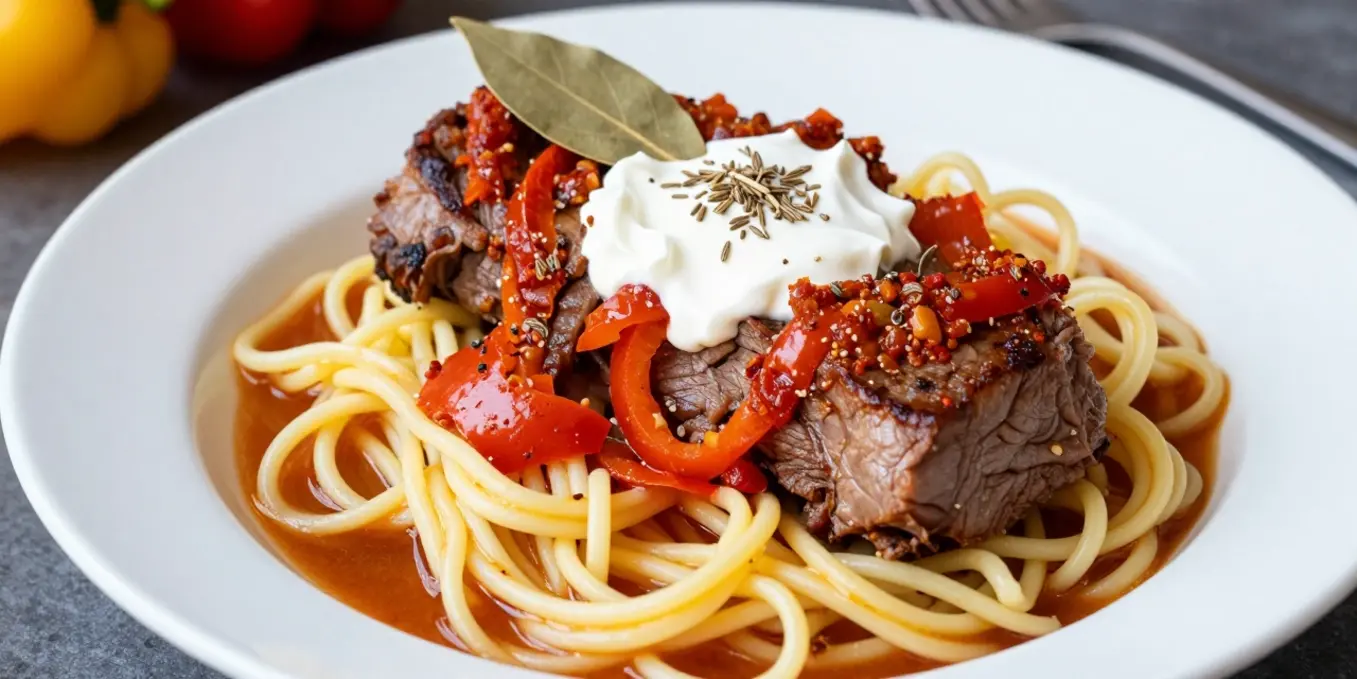
How to Make Beef Paprikash
Making this incredible beef paprikash is a journey, not a race. Each step builds on the last, creating layers of flavor that culminate in a dish that feels both comforting and utterly gourmet. I promise you, the aroma alone will be worth the effort!
Step-by-Step Instructions
- Prepare the Beef: Pat your beef chuck roast cubes thoroughly dry with paper towels. This is crucial for achieving a good sear, which locks in flavor. Season generously with salt and freshly ground black pepper.
- Brown the Beef: Heat the olive oil in a large Dutch oven or heavy-bottomed pot over medium-high heat until shimmering. Working in batches to avoid overcrowding (this is important for browning, not steaming!), sear the beef on all sides until deeply golden brown. Remove the browned beef to a plate and set aside. Don’t worry if there are some browned bits sticking to the bottom of the pot; those are flavor-gold!
- Sauté the Aromatics: Reduce the heat to medium. Add the diced onions to the pot, scraping up any browned bits from the bottom as they cook. Sauté for 8-10 minutes, stirring occasionally, until the onions are soft, translucent, and just beginning to caramelize. This slow cooking of the onions is key to the dish’s deep flavor.
- Add Garlic and Bell Pepper: Stir in the minced garlic and diced red bell pepper (if using). Cook for another 2-3 minutes, until fragrant. Be careful not to burn the garlic.
- Bloom the Paprika: Remove the pot from the heat briefly. This prevents the paprika from burning, which can make it bitter. Stir in the sweet Hungarian paprika and flour. Cook for 1 minute, stirring constantly, until a fragrant paste forms. This step, called blooming, intensifies the paprika’s flavor and color.
- Deglaze and Simmer: Return the pot to the heat. Gradually pour in the beef broth, scraping the bottom of the pot to loosen any remaining browned bits. Stir well to combine. Add the diced tomatoes (undrained), browned beef, caraway seeds (if using), and bay leaves (if using). Bring the mixture to a gentle simmer.
- Slow Cook to Perfection: Reduce the heat to low, cover the pot, and simmer for 2 to 2.5 hours, or until the beef is fork-tender. Check periodically and give it a stir to prevent sticking. If the sauce becomes too thick, you can add a little more beef broth or water. This is when the magic truly happens, transforming tough cuts into succulent morsels.
- Finish with Sour Cream: Once the beef is tender, remove the bay leaves. Taste and adjust seasoning with salt and pepper as needed. Remove the pot from the heat and let it cool for a few minutes. This prevents the sour cream from curdling. In a small bowl, whisk the sour cream until smooth. Stir a ladleful of the hot sauce into the sour cream to temper it, then gently stir the tempered sour cream into the pot until fully incorporated and creamy. Do not boil the paprikash after adding the sour cream.
- Serve: Ladle the rich, creamy traditional beef paprikash generously over hot egg noodles or spaetzle. Garnish with fresh parsley or dill, and prepare for pure culinary bliss.
Pro Tips & Variations
Over the years, cooking beef paprikash, I’ve picked up a few tricks and experimented with different twists. Here are some of my favorite ways to make this already fantastic dish even better, or to adapt it to your preferences:
- Choose Your Paprika Wisely: As I mentioned, the quality of your paprika makes all the difference. Invest in good quality sweet Hungarian paprika. Avoid generic supermarket brands if possible, as they often lack complexity. If you’re feeling adventurous and want a little kick, you can use a blend of sweet and hot Hungarian paprika. Just a touch of hot paprika can add a wonderful, subtle warmth without overwhelming the dish.
- Browning is Believing: Don’t rush the browning of the beef. Those browned bits, known as fond, are packed with flavor that will enrich your sauce. If your pot doesn’t get hot enough, or if you overcrowd it, the meat will steam instead of brown. Take your time, work in batches, and aim for a deep, crusty sear on all sides.
- The Slow Cooker Saves the Day: For an even more hands-off approach, you can easily adapt this to become an easy Hungarian beef paprikash slow cooker recipe. After browning the beef and sautéing the onions, garlic, and bell pepper, transfer everything (except the sour cream) to your slow cooker. Cook on low for 6-8 hours or on high for 3-4 hours, until the beef is meltingly tender. Stir in the sour cream just before serving. This is perfect for busy weekdays!
- Thickening the Sauce: If you find your sauce isn’t as thick as you’d like it to be, you have a few options. When you add the flour, ensure it cooks for a minute to remove the raw flour taste. Alternatively, you can remove a ladleful of the sauce, whisk in a tablespoon of flour or cornstarch, and then stir it back into the pot, simmering until thickened.
- Spice It Up: While traditionally this is a relatively mild dish, if you love heat, feel free to add a pinch of cayenne pepper with the paprika or a diced jalapeño with the bell pepper. For a smoky depth, a touch of smoked paprika (not too much, it’s potent!) can also be interesting.
- Dietary Variations:
- Gluten-Free: Simply use a gluten-free all-purpose flour blend or cornstarch as a thickener. Ensure your beef broth is also gluten-free.
- Dairy-Free: For the sour cream, you can use a plant-based sour cream alternative or simply omit it. The flavor will still be wonderfully rich from the paprika and beef.
- Vegetarian/Vegan: While not a beef paprikash, you can create a similar flavor profile using mushrooms (portobello or cremini) and hearty vegetables like carrots and potatoes, with vegetable broth.
- Chicken Paprikash: Follow the same method, but substitute boneless, skinless chicken thighs for the beef. Cooking time will be significantly reduced, likely 30-45 minutes of simmering. Adjust accordingly.
- The Caraway Seed Difference: If you’ve never used caraway seeds, give them a try! They add a distinctive, slightly rye-like flavor that is classic in Hungarian cuisine and beautifully complements the paprika and beef.
Beef Paprikash Serving Suggestions
Part of the joy of a truly delicious meal, especially a rich and comforting one like beef paprikash, is in how you present it, what you serve alongside. It completes the picture, you know? It’s about building a whole experience, a harmony of textures and flavors. Here are some of my favorite ways to serve this hearty dish:
- Classic Egg Noodles: This is my absolute go-to, the traditional pairing that just feels right. The wide, tender egg noodles are perfect for soaking up every last drop of that creamy, paprika-infused sauce. It’s simple, satisfying, and utterly delicious. Look for good quality, broad egg noodles for the best experience with your traditional beef paprikash over noodles.
- Creamy Mashed Potatoes: For those days when you crave ultimate comfort, a cloud of fluffy, buttery mashed potatoes is an unparalleled choice. The potatoes act as a soft, comforting bed for the tender beef and rich sauce, creating a truly luxurious experience. You can even swirl a little extra sour cream into your mashed potatoes for a complementary tang.
- Homemade Spaetzle: If you’re feeling a bit ambitious or want to really lean into the Hungarian authentic vibe, homemade spaetzle is a fantastic accompaniment. These soft, chewy dumplings are wonderfully porous, perfect for soaking up all the delicious gravy. It takes a little extra effort, but the reward is immense.
- Crusty Bread: Sometimes, the simplest things are the best. A warm, crusty loaf of bread, especially a sourdough or a rustic country loaf, is perfect for mopping up every last bit of that incredible sauce. Don’t let a single drop go to waste!
- A Bright, Fresh Salad: To cut through the richness of the paprikash, a crisp, simple green salad with a light vinaigrette is a wonderful counterpoint. Think fresh mixed greens, perhaps some thinly sliced red onion or cucumber, dressed with a lemon-herb vinaigrette. It adds that essential element of freshness and balance.
- Roasted Root Vegetables: While the paprikash itself is hearty, a side of roasted carrots, parsnips, or even Brussels sprouts can add another layer of flavor and texture. The slight caramelization of roasted vegetables offers a lovely contrast to the tender beef.
Ethan loves it with mashed potatoes, while the kids, like most kids, are partial to the noodles. Whatever you choose, make sure you have something that can truly embrace that glorious sauce. It’s the heart of the dish!
Beef Paprikash Storage & Reheating
One of the many beauties of a slow-cooked dish like homemade beef paprikash is that it often tastes even better the next day, allowing the flavors to meld and deepen further. This makes it an excellent candidate for meal prepping and enjoying leftovers!
-
Refrigeration:
- Once cooled to room temperature, transfer the beef paprikash to an airtight container.
- It will keep beautifully in the refrigerator for 3-4 days.
- I often make a big batch on Sunday for delicious, easy weeknight dinners.
-
Freezing:
- Can you freeze beef paprikash? Yes, with a small caveat. The sour cream can sometimes change texture slightly upon freezing and reheating, becoming a bit grainy. However, the flavor will still be fantastic!
- To freeze, allow the paprikash to cool completely.
- Transfer to freezer-safe airtight containers or heavy-duty freezer bags. If using bags, lay them flat for more efficient storage.
- It will store well in the freezer for up to 3 months.
- Pro Tip for Freezing: If you plan on making a large batch specifically for freezing, you can actually add the sour cream only to the portion you plan to eat fresh. For the portion you’re freezing, simply omit the sour cream and stir it in fresh once you reheat it. This ensures the best creamy texture when serving.
-
Reheating:
- From the Refrigerator:
- Stovetop: Transfer the paprikash to a saucepan over medium-low heat. Stir occasionally, adding a splash of beef broth or water if it seems too thick, until heated through.
- Microwave: Place a serving in a microwave-safe bowl. Cover loosely and heat in 1-minute intervals, stirring in between, until hot.
- From the Freezer:
- Thaw overnight in the refrigerator for best results.
- Once thawed, reheat using the stovetop or microwave methods described above.
- If reheating directly from frozen, use the stovetop method over low heat, allowing it to thaw and heat slowly, stirring frequently. You may need to add a bit of liquid.
That delicious aroma of reheating beef paprikash on a Tuesday night? Pure joy, I tell you. It’s like getting a second chance at Sunday dinner.
FAQ about Beef Paprikash
I often get questions from my readers about specific aspects of recipes, and this beloved beef paprikash is no exception. Here are some of the most common inquiries, answered to help you master this comforting dish:
-
What is the best cut of beef for beef paprikash?
For the most tender and flavorful results, I highly recommend using beef chuck roast. It’s well-marbled, which means it has enough fat to break down during the long, slow cooking process, resulting in incredibly succulent and fall-apart tender beef. Other cuts like round or sirloin can be used, but they might not achieve the same melt-in-your-mouth texture. -
Can I make beef paprikash in a slow cooker?
Absolutely! An easy Hungarian beef paprikash slow cooker recipe is a fantastic way to prepare this dish, especially on busy days. After browning your beef and sautéing the onions and garlic as directed in the recipe, transfer everything (except the sour cream) to your slow cooker. Cook on low for 6-8 hours or on high for 3-4 hours, or until the beef is fork-tender. Stir in the sour cream just before serving. -
What’s the difference between beef paprikash and goulash?
This is a great question! While both are Hungarian stew-like dishes featuring beef and paprika, there are key differences. Beef paprikash typically uses more paprika and is characterized by a creamy, rich sauce, often thickened with flour and finished with sour cream. Our take leans heavily into this style. Beef goulash, on the other hand, is generally considered more of a soup-stew, often including potatoes, carrots, and other vegetables, and while paprika is central, it usually doesn’t have the same creamy, sour cream-finished sauce as paprikash. Think of them as delicious cousins rather than twins! -
Why is my paprikash sour cream curdling?
This usually happens if the sour cream is added directly to boiling hot liquid. To prevent curdling, always remove the paprikash from the heat and let it cool for a few minutes before adding the sour cream. My preferred method is to ‘temper’ the sour cream: whisk a ladleful of the hot sauce into the sour cream in a separate bowl, then gently stir the warmed sour cream mixture back into the pot. This gradually brings the sour cream up to temperature, preventing shock and curdling. Also, ensure you’re using full-fat sour cream, as light versions are more prone to curdling. -
What is sweet Hungarian paprika and why is it important?
Sweet Hungarian paprika is a mild, vibrant red spice made from specific varieties of ripe, dried peppers. It’s crucial for traditional beef paprikash because it provides the signature color, aroma, and sweet, earthy flavor without any heat. It’s different from hot paprika (which adds spice) and smoked paprika (which adds a smoky flavor). Using genuine sweet Hungarian paprika ensures your dish has that authentic, rich character. Don’t compromise on this ingredient, it’s the heart of the dish! -
Can I add vegetables to beef paprikash?
While traditional beef paprikash focuses mainly on beef, onions, and paprika for the main body, I often like to add red bell peppers for extra flavor, color, and sweetness, as included in this recipe. Carrots are another common addition that can be added alongside the onions for extra sweetness and nutrition. For a more complete dish, feel free to add these or even some diced potatoes during the last hour of cooking, creating more of a paprika beef stew feel.
Final Thoughts
As the last swirls of creamy, red-gold sauce are scraped from the pot, and the satisfied sighs echo around our kitchen table, I’m always reminded of what truly matters. Cooking, for me, has never just been about nourishment for the body; it’s about feeding the soul, building connections, and weaving the everyday moments into something memorable. This beef paprikash, with its deep flavors and comforting warmth, does exactly that. It’s a reminder that gratitude can be found in the simplest of shared meals, in the clinking of forks, and in the quiet joy of a family gathered. It’s not about perfection, but about the love infused into every stir, every simmer, every shared bite.
I hope this recipe brings as much warmth and happiness to your home as it does to ours. May your skillet be full, your heart be light, and your table always surrounded by those you cherish. Thanks for joining me on this culinary adventure from my kitchen to yours.
If you loved this story and recipe, please consider leaving a comment below, sharing this post on Pinterest, and subscribing to MisterRecipes.com for more heartfelt stories from the skillet!
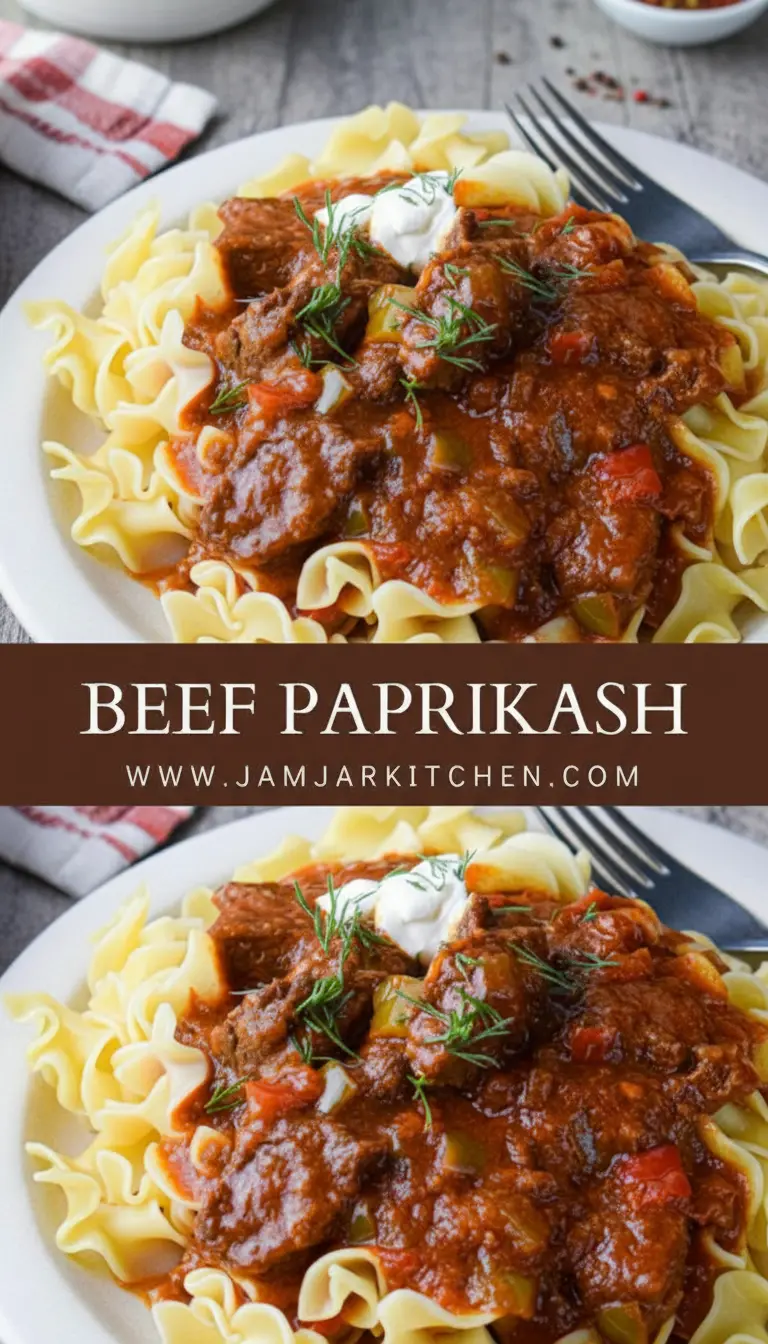

Beef Paprikash
Ingredients
Equipment
Method
- Pat the beef chuck roast cubes thoroughly dry with paper towels. Season generously with salt and freshly ground black pepper. Heat the olive oil in a large Dutch oven or heavy-bottomed pot over medium-high heat until shimmering. Working in batches, sear the beef on all sides until deeply golden brown. Remove the browned beef to a plate and set aside.
- Reduce the heat to medium. Add the diced onions to the pot, scraping up any browned bits from the bottom. Sauté for 8-10 minutes, stirring occasionally, until the onions are soft, translucent, and just beginning to caramelize. Stir in the minced garlic and diced red bell pepper (if using). Cook for another 2-3 minutes, until fragrant.
- Remove the pot from the heat briefly. Stir in the sweet Hungarian paprika and flour. Cook for 1 minute, stirring constantly, until a fragrant paste forms. Return the pot to the heat. Gradually pour in the beef broth, scraping the bottom of the pot to loosen any remaining browned bits. Stir well to combine. Add the diced tomatoes, browned beef, caraway seeds (if using), and bay leaves (if using). Bring the mixture to a gentle simmer.
- Reduce the heat to low, cover the pot, and simmer for 2 to 2.5 hours, or until the beef is fork-tender. Check periodically and give it a stir to prevent sticking. If the sauce becomes too thick, you can add a little more beef broth or water. Once the beef is tender, remove the bay leaves. Taste and adjust seasoning with salt and pepper as needed. Remove the pot from the heat and let it cool for a few minutes. In a small bowl, whisk the sour cream until smooth. Stir a ladleful of the hot sauce into the sour cream to temper it, then gently stir the tempered sour cream into the pot until fully incorporated and creamy.
- Ladle the rich, creamy beef paprikash generously over hot egg noodles or spaetzle. Garnish with fresh parsley or dill and serve.