
Do you ever find yourself gazing out a frosty window, the steam from your mug fogging the glass, dreaming of a meal that hugs you from the inside out? I know I do, especially when the crisp Oregon winter settles in, painting everything with a soft, ethereal quiet. For me, that feeling, that deep-seated desire for comfort and warmth, often leads me straight to my kitchen, and more specifically, to a simmering pot of Winter Minestrone Soup. This isn’t just any soup, it’s a story in every spoonful, a culinary embrace that reminds me of Ethan and the kids, gathered around our worn kitchen table, laughter echoing as steam dances upward.
It’s funny how food can be such a potent time capsule. Just the other day, Adams, our youngest, asked for “that chunky, colorful soup you make,” and immediately, my mind drifted back to a particularly blustery afternoon, much like the ones my grandmother cherished for her own hearty soups. This isn’t a quick fix, it’s a soul fix, a rich tapestry of flavors woven from simple, honest ingredients. Whether you’re searching for Ina Garten’s Winter Minestrone recipe, or perhaps a comforting bowl similar to Lidia Bastianich’s, this recipe for a truly warming, incredibly satisfying Winter Minestrone Soup will become a beloved staple in your home. It’s about creating moments, not just meals, a philosophy that sits at the very heart of MisterRecipes.com.
Table of Contents
- Why You’ll Love This Winter Minestrone Soup
- Ingredients for Winter Minestrone Soup
- How to Make Winter Minestrone Soup
- Pro Tips & Variations
- Winter Minestrone Soup Serving Suggestions
- Winter Minestrone Soup Storage & Reheating
- FAQ about Winter Minestrone Soup
- Final Thoughts
Why You’ll Love This Winter Minestrone Soup
- It’s a Hug in a Bowl: There’s something undeniably comforting about a steaming bowl of homemade soup, especially when it’s brimming with vibrant vegetables and savory broth. This hearty minestrone instantly warms you from the inside out, chasing away the chill of a cold day.
- Packed with Nutrients: We’re talking carrots, celery, onion, garlic, robust cannellini beans, and those glorious diced tomatoes. Plus, the addition of butternut squash and kale makes it a nutritional powerhouse. It’s a delicious way to get those essential vitamins and minerals, perfect for boosting spirits during the darker months.
- Easily Customizable: One of my favorite things about this winter vegetable soup is its flexibility. Have extra spinach? Toss it in! Prefer great northern beans to cannellini? Go for it! This recipe embraces what you have on hand, minimizing waste and encouraging creativity in the kitchen.
- Kid-Friendly Favorite: My kids, Adams and Jana, devour this soup. The mixture of textures and flavors, from tender pasta to sweet butternut squash, makes it appealing even to the pickiest eaters. Plus, it’s a fun way to get them to eat their veggies without a fuss.
- A True One-Pot Wonder: While there’s a little chopping involved, most of the magic happens in a single pot. This means less cleanup and more time enjoying those precious family moments around the dinner table.
- Budget-Friendly: Utilizing seasonal vegetables, pantry staples like beans and pasta, this minestrone soup recipe is incredibly economical. It stretches your dollar while delivering maximum flavor and satisfaction.
- Meal Prep Dream: This soup tastes even better the next day as the flavors meld and deepen. It’s perfect for prepping ahead for busy weeknights, or for dividing into individual portions for quick, healthy lunches throughout the week.
- Celebrates Whole Ingredients: True to my philosophy at MisterRecipes.com, this Winter Minestrone Soup with kale and beans focuses on wholesome, unprocessed ingredients. You’ll feel good knowing exactly what’s in your bowl.
- Impressively Delicious, Surprisingly Simple: While it boasts a rich, complex flavor, the steps to make this soup are straightforward and accessible for any home cook. You don’t need to be a Michelin-star chef to create something truly extraordinary.
- The Perfect Antidote to Winter Blues: There’s an emotional language to food, and this soup speaks volumes of warmth, comfort, and care. It’s a culinary remedy for those dreary winter days, filling your home with an aroma that spells pure happiness.
Ingredients for Winter Minestrone Soup
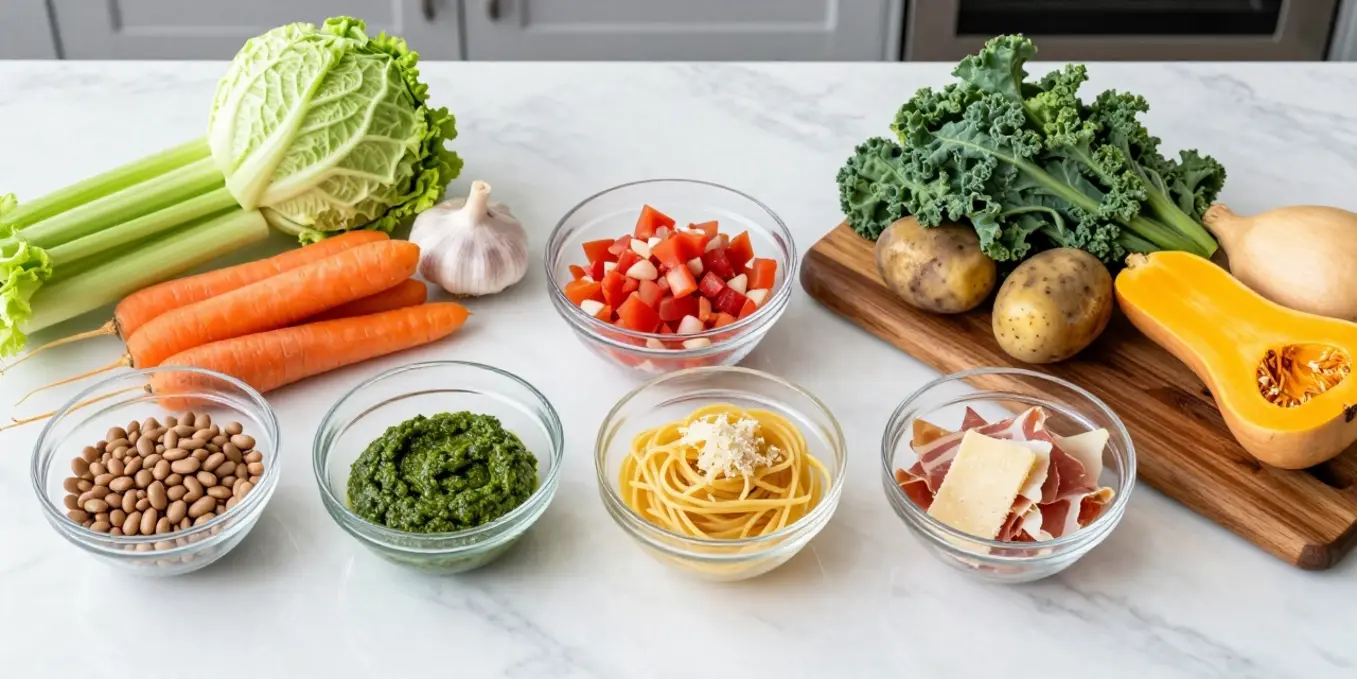
Gathering your ingredients is the first step in painting this delicious culinary canvas. Here’s what you’ll need, with some handy substitution notes:
- 2 tablespoons olive oil
- 1 large yellow onion, diced
- 2 carrots, peeled and diced
- 2 celery stalks, diced
- 4 cloves garlic, minced
- 4 ounces pancetta, diced (optional, for an easy winter minestrone soup pancetta flavor boost)
- 1 teaspoon dried oregano
- ½ teaspoon dried thyme
- ¼ teaspoon red pepper flakes (adjust to your spice preference)
- 6 cups vegetable broth or chicken broth (for a vegan winter minestrone, ensure you use vegetable broth)
- 1 (28-ounce) can diced tomatoes, undrained
- 1 (15-ounce) can cannellini beans, rinsed and drained (great northern beans also work beautifully)
- 1 large butternut squash, peeled, seeded, and diced into ½-inch cubes (about 3 cups)
- 1 large potato (Yukon Gold or Russet), peeled and diced into ½-inch cubes
- ½ cup small pasta, such as ditalini or orzo (for a gluten-free minestrone soup, use g-free pasta or omit)
- 3 cups chopped kale, spinach, or cavolo nero, tough stems removed (cabbage is a great substitution too)
- ¼ cup fresh parsley, chopped
- Salt and freshly ground black pepper, to taste
- Parmesan rind (optional, for simmering, adds depth of flavor)
- ½ cup dry white wine (optional, adds brightness and acidity to the base)
- For serving: grated Parmesan cheese, a drizzle of pesto, crusty bread
How to Make Winter Minestrone Soup
Step-by-Step Instructions
- Prepare Your Foundation: In a large Dutch oven or heavy-bottomed pot over medium heat, add the olive oil. If using pancetta, now’s the time to crisp it up. Add the diced pancetta and cook, stirring occasionally, until golden and rendered, about 5-7 minutes. Remove the pancetta with a slotted spoon and set aside, leaving the rendered fat in the pot. If not using pancetta, simply proceed with the olive oil.
- Build the Aromatic Base: Add the diced onion, carrots, and celery to the pot. Sauté, stirring frequently, until the vegetables begin to soften and become translucent, about 8-10 minutes. The kitchen will begin to fill with the most wonderful aroma, a promise of the deliciousness to come.
- Infuse with Flavor: Stir in the minced garlic, dried oregano, dried thyme, and red pepper flakes. Cook for another minute, until the garlic is fragrant, being careful not to let it brown. This step is crucial for developing the deep, rich flavor of your Winter Minestrone Soup.
- Deglaze (Optional, but Recommended): If using, pour in the dry white wine. Scrape the bottom of the pot with a wooden spoon, lifting all those delicious browned bits. Let it simmer until the wine has mostly evaporated, about 2-3 minutes. This adds a beautiful layer of complexity.
- Liquid Gold: Pour in the vegetable broth and the undrained can of diced tomatoes. Add the rinsed cannellini beans, diced butternut squash, and diced potato. If you have a parmesan rind, drop it in now, it will melt into oblivion and infuse the whole pot with umami goodness. Bring the soup to a gentle boil, then reduce the heat to low, cover, and simmer for 20-25 minutes, or until the butternut squash and potatoes are fork-tender. This slow simmer allows all the flavors to meld beautifully, creating a truly hearty minestrone.
- Pasta Time: Stir in the small pasta. Continue to simmer, uncovered, for another 8-10 minutes, or according to package directions, until the pasta is al dente. Keep an eye on it, as you don’t want the pasta to get mushy.
- Green Goodness: Add the chopped kale (or spinach/cavolo nero) to the pot. Stir until the greens wilt and turn a vibrant green, which usually takes only 2-3 minutes.
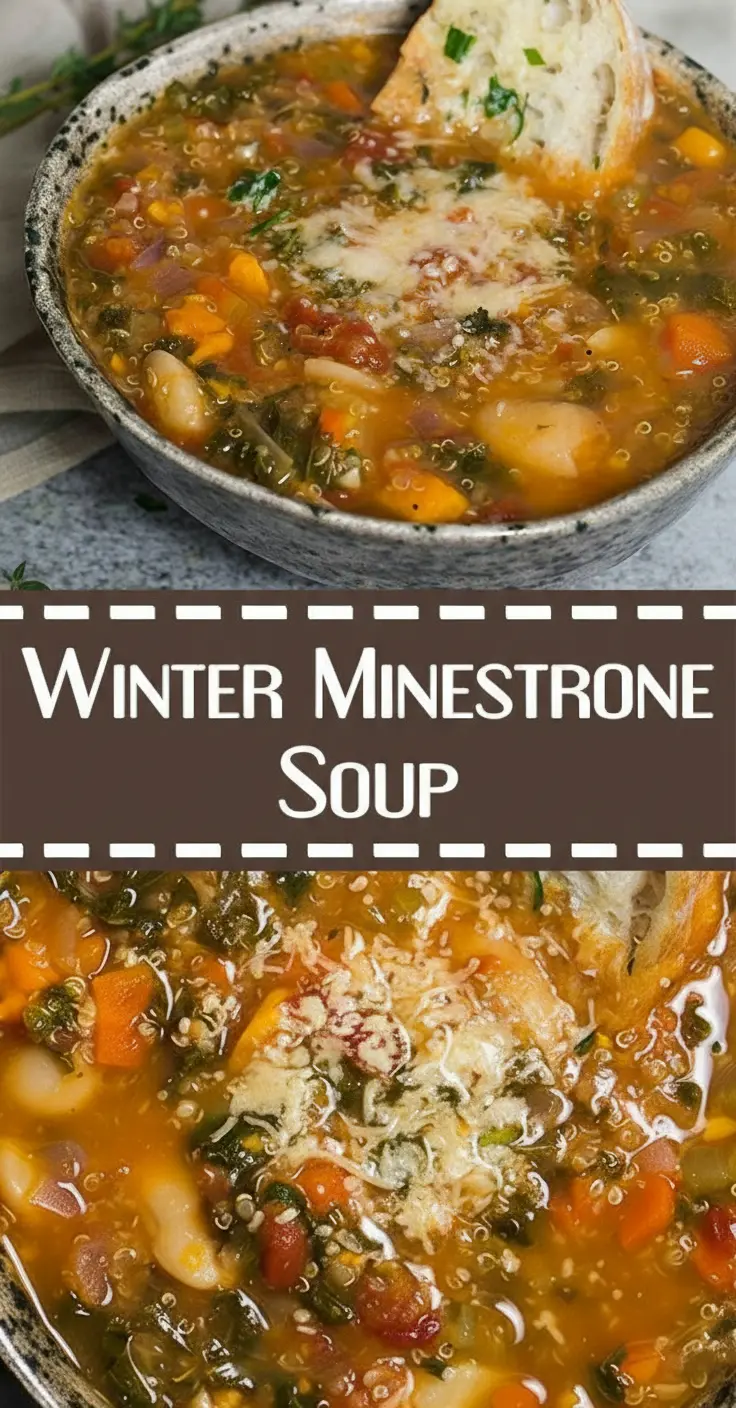
- Season and Serve: Remove the parmesan rind if you used it. Stir in the chopped fresh parsley. Taste the soup and season generously with salt and freshly ground black pepper. Remember, good seasoning elevates all the natural flavors. Ladle the hot Winter Minestrone Soup into bowls. Garnish with grated Parmesan cheese, a drizzle of pesto, and a sprinkle of the reserved crispy pancetta, if using. Serve immediately with crusty bread for dipping. Ethan loves dipping a warm piece of focaccia into this blissful creation.
Pro Tips & Variations
- Embrace the Mirepoix: Don’t rush the sautéing of the onion, carrots, and celery. This aromatic base (often called mirepoix) is the flavor foundation of your soup. Allowing them to soften and sweeten properly will yield a much richer broth.
- Season in Layers: Don’t just season at the end. Add a pinch of salt and pepper after sautéing the vegetables, again after adding the broth, and finally just before serving. This builds a more complex, well-rounded flavor profile.
- Pasta Perfection: If you plan on having leftovers, consider cooking the pasta separately and adding it to individual bowls just before serving. This prevents the pasta from absorbing too much liquid and becoming mushy in the fridge, ensuring your minestrone soup recipe retains its perfect texture.
- Make it Vegan: To make this a truly vegan winter minestrone, simply use vegetable broth and omit the pancetta and Parmesan cheese/rind. A nutritional yeast sprinkle or a swirl of vegan pesto can add a lovely savory note.
- Going Gluten-Free: For a gluten-free minestrone soup, choose your favorite gluten-free pasta or simply omit the pasta entirely. The vegetables and beans are substantial enough to make it a satisfying meal on their own.
- Spice it Up: For an extra kick, add more red pepper flakes, or a dash of hot sauce, or a pinch of cayenne pepper with the rest of the spices.
- Add More Greens: Feel free to experiment with other leafy greens like spinach, chard, or even cabbage. Just add them at the end, stirring until wilted.
- Protein Boost: For an even more substantial soup, you can add cooked chicken breast, Italian sausage, or even small meatballs during the last 10 minutes of simmering.
- Garnish Galore: Don’t underestimate the power of garnishes! Fresh parsley, grated Parmesan, a dollop of pesto, or even a sprinkle of crumbled feta can elevate the soup’s presentation and add bursts of flavor.
Winter Minestrone Soup Serving Suggestions
A bowl of Winter Minestrone Soup is a satisfying meal in itself, but a few thoughtful accompaniments can elevate the experience into something truly memorable. Here are some of our favorite ways to serve it, turning a simple dinner into a cherished occasion:
- Crusty Artisan Bread: This is non-negotiable in our house. A warm, crusty baguette, a rustic sourdough, or a delicate ciabatta is perfect for soaking up every last drop of that rich, savory broth. Emily often bakes her own no-knead bread, and there’s nothing quite like tearing off a warm piece and dipping it.
- Garlic Bread or Cheesy Toast: Take that crusty bread up a notch by turning it into garlic bread. Slice it, spread with garlic butter, and bake until golden. Or, for a cheesy twist, sprinkle with mozzarella and Parmesan before baking. It’s a delightful salty, savory crunch to complement the smooth soup.
- Simple Green Salad with Vinaigrette: A light, crisp green salad provides a wonderful textural and flavor contrast. Think delicate mixed greens, a few cucumber slices, and a tangy lemon vinaigrette. The brightness of the salad cuts through the richness of the soup beautifully.
- Homemade Pesto Drizzle: A swirl of fresh basil pesto added right before serving is a game-changer. It adds a burst of freshness, herbaceousness, and a lovely touch of garlic and pine nuts. You can even make your own if you’re feeling ambitious, for a truly Ina Garten soup recipe touch.
- Extra Parmesan or Pecorino Romano: For those who love a cheesy kick, a generous grating of fresh Parmesan or Pecorino Romano cheese over the top of each bowl is always welcome. The salty, nutty notes enhance the overall flavor profile of this butternut squash minestrone.
- White Bean Puree Toast: For something a little different, toast some bread, spread it generously with a simple white bean puree (blended cannellini with olive oil, garlic, and lemon), and serve alongside the soup. It’s a lovely, creamy accompaniment.
Winter Minestrone Soup Storage & Reheating
One of the best things about this Winter Minestrone Soup is how wonderfully it keeps, often tasting even better the next day as the flavors deepen and meld:
- Refrigerator: Allow the soup to cool completely to room temperature before transferring it to an airtight container. It will keep beautifully in the refrigerator for up to 3-4 days.
- Freezer: This soup freezes exceptionally well. Again, ensure it’s completely cooled. Transfer to freezer-safe containers or heavy-duty freezer bags, leaving a little headspace if using containers, as liquids expand when frozen. It can be frozen for up to 3 months. When ready to enjoy, thaw overnight in the refrigerator or gently reheat from frozen on the stovetop.
- Reheating:
- Stovetop: This is my preferred method. Transfer the desired amount of soup to a saucepan over medium-low heat. Stir occasionally until heated through. If the soup has thickened too much, you can add a splash of vegetable broth or water to reach your desired consistency.
- Microwave: For individual portions, transfer to a microwave-safe bowl. Heat on high in 1-2 minute intervals, stirring in between, until hot.
- A Note on Pasta: As mentioned in the Pro Tips, if you know you’ll have a significant amount of leftovers, consider cooking the pasta separately and adding it to individual bowls prior to serving. This prevents the pasta from absorbing too much liquid and becoming overly soft when stored and reheated. If your stored soup does have pasta and it’s a bit too soft for your liking, don’t worry, it’s still delicious!
FAQ about Winter Minestrone Soup
- What’s the difference between this and Ina Garten’s Winter Minestrone? While both are wonderfully hearty, my recipe emphasizes minimal waste and a slightly more rustic, home-style approach, often incorporating a parmesan rind for depth. Ina’s is fantastic, of course, but mine leans into the convenience for a busy weeknight while still delivering profound flavor.
- Can I make an easy winter minestrone soup pancetta without the pancetta? Absolutely! The pancetta adds a smoky, savory depth, but the soup is still incredibly flavorful without it. For a vegetarian or vegan winter minestrone, simply omit the pancetta and ensure you use vegetable broth.
- What kind of beans are best for a winter minestrone soup with kale and beans? Cannellini beans are traditional and give a creamy texture, but great northern beans, kidney beans, or even chickpeas work wonderfully if that’s what you have in your pantry.
- How can I make my minestrone soup thicker? If you prefer a thicker soup, you can mash a portion of the beans and squash against the side of the pot with your spoon, or even blend a cup or two of the soup with an immersion blender before adding the pasta and greens. Another trick is to adjust the amount of broth, starting with slightly less and adding more as needed to reach your desired consistency.
- Can I prepare the vegetables ahead of time for this minestrone soup recipe? Yes, you absolutely can! Chopping your onion, carrots, celery, garlic, butternut squash, and potatoes ahead of time is a great time-saver. Store them in separate airtight containers in the refrigerator for up to 2-3 days, and your soup will come together much faster on cooking day.
Final Thoughts
As the last wisps of steam rise from a bowl of this Winter Minestrone Soup, I’m always reminded that the most profound joy often comes from the simplest things. It’s in the rhythmic chop of vegetables, the fragrant sizzle of garlic, the quiet hum of a simmering pot. This isn’t just a recipe, it’s an invitation to slow down, to savor, and to connect. To share a nourishing meal with the people you love, creating memories that will warm you long after the last spoonful is gone. Gratitude spills from my heart onto this page, not just for the food itself, but for the act of preparing it, the stories it holds, and the communal warmth it fosters. From my kitchen in Bend, Oregon, to yours, I hope this recipe brings as much comfort and joy to your family as it does to ours.
If you’ve loved this recipe, I’d be so honored if you’d save it to your Pinterest board, leave a comment below to share your experience, or subscribe to MisterRecipes.com for more heartfelt stories from the skillet. Happy cooking, my friends.

Winter Minestrone Soup
Ingredients
Equipment
Method
- In a large Dutch oven or heavy-bottomed pot over medium heat, add the olive oil. If using pancetta, now’s the time to crisp it up. Add the diced pancetta and cook, stirring occasionally, until golden and rendered, about 5-7 minutes. Remove the pancetta with a slotted spoon and set aside, leaving the rendered fat in the pot. If not using pancetta, simply proceed with the olive oil.
- Add the diced onion, carrots, and celery to the pot. Sauté, stirring frequently, until the vegetables begin to soften and become translucent, about 8-10 minutes. The kitchen will begin to fill with the most wonderful aroma, a promise of the deliciousness to come.
- Stir in the minced garlic, dried oregano, dried thyme, and red pepper flakes. Cook for another minute, until the garlic is fragrant, being careful not to let it brown. This step is crucial for developing the deep, rich flavor of your Winter Minestrone Soup.
- If using, pour in the dry white wine. Scrape the bottom of the pot with a wooden spoon, lifting all those delicious browned bits. Let it simmer until the wine has mostly evaporated, about 2-3 minutes. This adds a beautiful layer of complexity.
- Pour in the vegetable broth and the undrained can of diced tomatoes. Add the rinsed cannellini beans, diced butternut squash, and diced potato. If you have a parmesan rind, drop it in now, it will melt into oblivion and infuse the whole pot with umami goodness. Bring the soup to a gentle boil, then reduce the heat to low, cover, and simmer for 20-25 minutes, or until the butternut squash and potatoes are fork-tender. This slow simmer allows all the flavors to meld beautifully, creating a truly hearty minestrone.
- Stir in the small pasta. Continue to simmer, uncovered, for another 8-10 minutes, or according to package directions, until the pasta is al dente. Keep an eye on it, as you don't want the pasta to get mushy.
- Add the chopped kale (or spinach/cavolo nero) to the pot. Stir until the greens wilt and turn a vibrant green, which usually takes only 2-3 minutes.
- Remove the parmesan rind if you used it. Stir in the chopped fresh parsley. Taste the soup and season generously with salt and freshly ground black pepper. Remember, good seasoning elevates all the natural flavors. Ladle the hot Winter Minestrone Soup into bowls. Garnish with grated Parmesan cheese, a drizzle of pesto, and a sprinkle of the reserved crispy pancetta, if using. Serve immediately with crusty bread for dipping.